Technical development projects require generally to work with processes. Time is up for software one-man-shows. Time is also up for quality as executive suites ordered action and no one took care about it. Technical regulations and standards demand much more as a few smart main entry slogans. E.g. product developments with ISO 26262 is just allowed for companies with a provied process culture.
Eicher Engineering offers you a competent consulting.
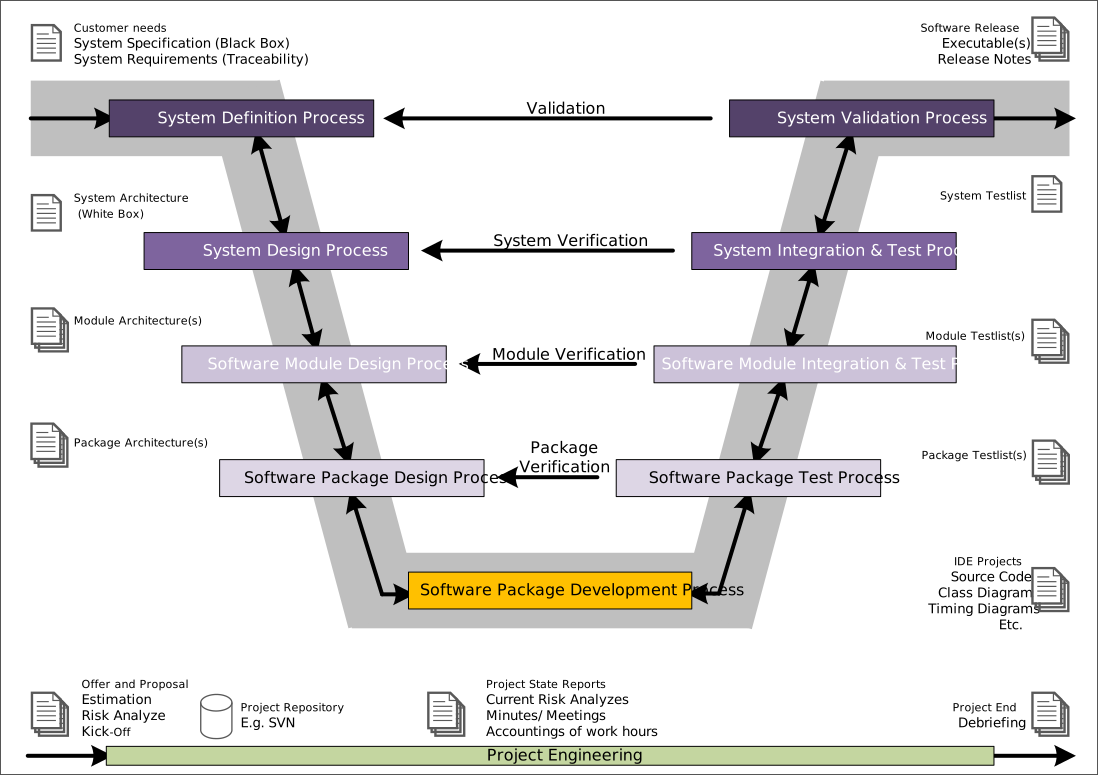
Eicher Engineering realizes projects by means of the V-Model. This process model includes all relevant aspects of a product development.
Process definitons are easy. Comply and consider them is much more ambitious in the daily work. But that's the point. It is the base that the work can execute within a pre-defined frame. Everyone has to comply with it without exception. Staff often consider processes as a useless constraint which prevent for good working. But well-established processes give more time for the essential.
CMMI (Capability Maturity Model Integration) is a tool for process improvement. CMMI gives information about that what should be doing in a project and in the company to improve the opainable of the goals within time and budget.
CMMI also considers:
Projects will be realized much better within a good process culture. Planning, estimation, risk analysis, staff skills, reports, etc. are defined as standard process tools. This leads to more time and less stress for the essential.
Every developer practices requirement engineering consciously or unconsciously. Requirement engineering means if the correct implementation and test of the demand requirements. This sounds logical and understandable. But this often gets wrong or it disappears into the function jungle.
A good customer involved requirement engineering prevents useless discussions and wrong assumptions. You also get good transparency with a correct traceability. This again eases the testing.
There are uncountable tools for all aspects of a product development. Eicher Engineering means that important artifacts (e.g. customer relevant artifacts) should be exist as a standard text document (e.g. Microsoft Word). You avoid complicated tool exports and compatibility problems. But we also recommend tools which ease the work and protect the artifacts (e.g. SVN subversion or Git for the data repository).